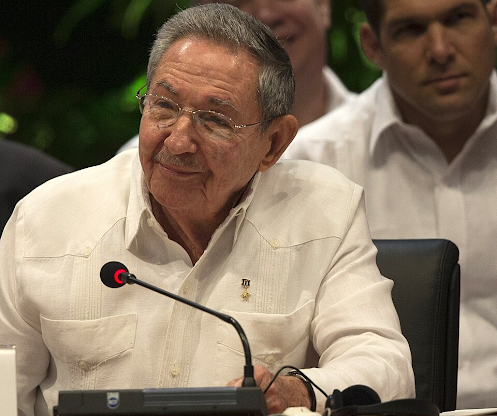
A federal grand jury in Miami has indicted former Cuban President Raúl Castro, alleging Cuban military forces were acting on his orders when they shot down two civilian aircraft in 1996, killing four people — three of whom were American citizens.
Acting Attorney General Todd Blanche announced the charges at Miami’s Freedom Tower, a site long symbolic of the Cuban exile experience in South Florida. The counts include conspiracy to kill U.S. nationals, destruction of an aircraft and four individual counts of murder
Cuban President Miguel Diaz-Canel refuted these claims, calling the indictment a “political maneuver, devoid of any legal foundation, aimed solely at padding the fabricated dossier they use to justify the folly of a military aggression against Cuba.”
While these charges surround a 30-year-old attack, many say the sudden decision to pursue them now has everything to do with a much longer history of U.S. intervention in Cuba.
This indictment comes months after the Trump administration carried out airstrikes in Venezuela and captured President Nicolás Maduro, the most significant U.S. intervention in Latin America since the 1990s. This operation specifically set off alarms across the region and renewed longstanding anxieties about Washington’s willingness to act unilaterally against governments it opposes.
Regional leaders have tended to split along ideological lines in response to U.S. actions, with left-leaning governments in Brazil, Colombia and Uruguay condemning the Venezuela operation, while right-wing leaders in Argentina and Ecuador celebrated it. But even among Washington’s allies, many agree that the nature of the raid was seen as a violation of the United Nations Charter’s prohibition on the use of force.
Across Latin America, references to regime change can evoke memories of past foreign interventions. Historical attempts to destabilize or remove governments through military force, covert action and economic pressure have frequently generated political backlash and long-term regional distrust.
In an interview with Rafael Ioris, a history faculty member at the University of Denver, he stated, “This is a signal that the US will continue to be aggressive in the region.”
The faculty member explained how there is a common pattern of the U.S. deciding they need to intervene in a country when there is any political shift that threatens American strategic or corporate interests, with deep roots to this tracing all the way back to the 1950s.
The Castro indictment is just another step in the escalatory ladder that began with the capture of President Maduro, the charges now giving the U.S. a legal pretext for a similar operation to seize Castro.
“Trump was very happy with what happened in Venezuela,” Ioris said, “The press asked, ‘What is the legal basis for this?’ and there wasn’t a clear answer. Maduro was already indicted in the U.S. They are trying to build the same case here.”
The release of the indictment at Miami’s Freedom Tower left very little doubt about its domestic political purpose, serving as a long-awaited win for Cuban-American lawmakers in South Florida. Republican lawmakers have been pushing the Justice Department since February to reopen the criminal investigation into Castro’s role in the 1996 shootdown.
With no extradition treaty between Cuba and the United States, analysts view the charges as largely symbolic. If convicted, Castro could face life imprisonment or the death penalty. He is 94 years old.
Former diplomats note that with the White House already occupied with the Iran war, there is little belief that a military operation against Cuba is imminent. But for much of Latin America, the indictment is less a legal document than a warning, one that echoes a pattern that the region knows well.