The Federal TRIO Program first introduced the “first-generation student” in the late 1970s. TRIO defines this particular student as one who falls within one of the three following criteria:
– A student neither of whose natural or adoptive parents received a baccalaureate degree.
– A student who regularly resided with and received support from only one parent, and that supporting parent did not receive a bachelor’s degree.
– A student who did not regularly reside or receive support from a natural or adoptive parent.
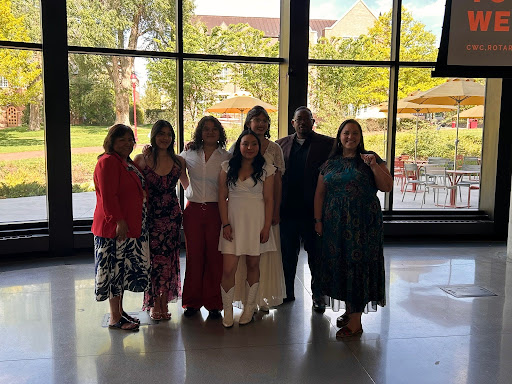
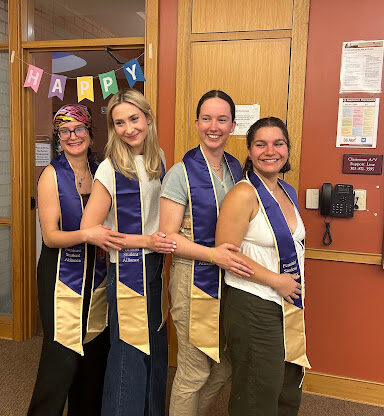
Ingrid Dayanara Romero is a first-generation student at the University of Denver, who is graduating two years early with a Bachelor of Arts in political science, accompanied by minors in leadership studies and sustainability.
Romero started her college journey before graduating from Rangeview High School, through Aurora Public Schools’ concurrent enrollment program in partnership with the Community College of Aurora. The program provides high school students with an opportunity to receive college credit alongside their high school credits.
With the opportunity to dual-enroll, Romero earned an Associate of Arts in May 2024 alongside her high school diploma, giving her a head start at DU.
“It gave me a sense of what learning at a collegiate level was, and I fell in love with taking classes for my particular major or something I enjoyed, versus general curriculum courses,” Romero said.
She finds motivation to pursue higher education from her family, as her parents instilled the importance of education in her. Her love of learning is also a factor, as shown by her dedication to her community college courses.
It’s challenging enough to be a college student, but graduating early was an even bigger feat. Romero found difficulty with time management as she worked full-time while also taking a full course load throughout her time at DU. On top of that, she also valued involvement on campus and engaged in extracurriculars, such as Roteract Club, PODER and Sigma Lambda Gamma National Sorority Incorporated.
She also cited navigating the “newness” of college as an additional obstacle to overcome. Being the first person in her family to go to college also meant she was the first to submit college applications, apply for financial aid and figure out on-campus housing.
Romero found support in her faculty advisor and favorite professor, Dr. Jesse Acevedo. Even when Romero experienced burnout and was exhausted, Acevedo continued to remind her why she loved learning. Romero described Dr. Acevedo’s clear love for teaching as engaging and conducive, and further described Dr. Acevedo as a professor who cares about his students.
Romero’s friends, whom she met through student organizations and sororities, also served as a crucial part of her support system.
“Even though we are all busy people with a lot on our plates, I can always count on them to be here for me, to listen, to cheer me up,” she said of her system.
After she walks the stage, Romero plans to take a much needed break. She wants to spend more time creating and getting experience in nonprofit work. Eventually, she wants to get back to a point where she can be present and dedicated before further pursuing more education or a long-term career.
Although her educational path has always been unconventional and accelerated, she initially thought her path would be linear. The plan was to graduate at 20 and be in law school by 23, but after this accomplishment, she decided to take more time to see the world, work with people and continue to learn more about herself.
First@DU will be hosting a First-Gen Graduation Reception on June 10 at 9 p.m. To further get involved with First@DU, visit their site.