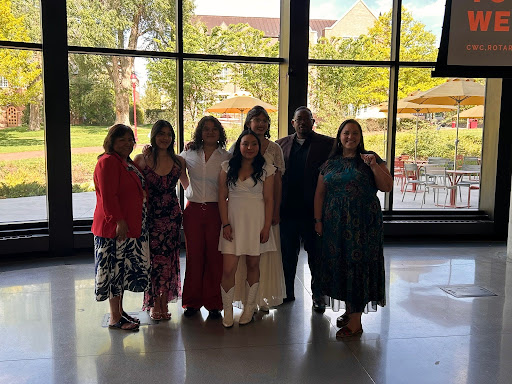
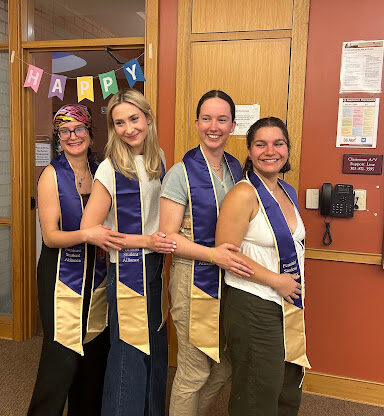
On Feb. 26, Sisterhood DU and the Feminist Student Alliance (FSA) held a collaborative educational event about Black feminism to wrap up the end of Black History Month on campus.
This event consisted of a presentation on Black feminism’s history, a discussion on how to apply these ideals to attendees’ feminist praxis and an exciting trivia game to see what attendees learned.
Examining the origins and philosophies of Black feminism provided context for understanding its foundational ideas and contemporary relevance.
Black feminism is a social and political movement that focuses on the multidimensional aspects of oppression experienced by Black women in the United States and internationally. Black feminists examine issues often overlooked by mainstream feminism and highlight those who remain underrepresented.
Black women have always been aware of their unique position as being Black and female. Sojourner Truth’s “Ain’t I a Woman?” speech was one of the first known articulations of the experiences of Black and white women in the U.S. During the Women’s Suffrage Movement, Black women were often excluded by white suffragettes.
Susan B. Anthony, a prominent suffragette of her time, once said, “I will cut off this right arm of mine before I will ever work or demand the ballot for the Negro and not the woman.”
This quote demonstrates the unique position of Black women during the time because it completely disregards the role of Black women in the Suffrage Movement.
The Civil Rights Movement, which was predominantly male focused and led, prompted Black women to form their own organizations and develop their own distinct principles of liberation. Encapsulating ideas of intersectionality, which is a framework for understanding how issues like sexism, racism, class and other identities can overlap and impact people in several ways.
This culminated in the creation of the Combahee River Collective. This Black feminist lesbian socialist organization articulated the importance of class and sexuality in addition to race as oppressive structures. In 1977, they wrote the Combahee River Collective statement, which exemplifies these principles and remains an extremely formative text in modern feminist thought.
After this brief presentation on the expansive history of Black feminism, guests were invited to share their thoughts on the presentation and how they could apply these histories to their own feminist praxis.
“I feel like I learned a lot about the specific figures and women in Black feminist history,” said Sawyer Furio, a third-year computer science major.
Others shared ideas on ways to widen their knowledge beyond the presentation. Some shared book recommendations like the novel “Their Eyes Were Watching God” by Zora Neal Hurston, or YouTube video essayists, like Shanspeare.
“I was inspired to educate myself further and overall broaden my worldview,” said Rose Lee, first-year psychology major.
After a thrilling trivia game among the attendees, both Lee and Furio respectively placed first and second, each earning an assorted bag of candies as a reward.
DU’s FSA is looking forward to a variety of spring events but is currently preparing for the annual “8MDU” celebration on March 9, in honor of International Women’s Day. The group plans to host a panel of feminists from several disciplines across campus to help students understand different perspectives on feminism.
Sisterhood is gearing up for a career panel focused on Black women professionals during the spring quarter, with more details to come soon.
For more information about these events, follow Sisterhood and FSA on Instagram and join their Crimson Connect pages.