It has been nearly 100 years since historian and educator Dr. Carter G. Woodson launched Negro History Week as a commemoration of “the Black past.” As the son of formerly enslaved parents, Woodson understood the damage and disservice it does to people when they are denied their history and are unable to draw inspiration from what their forbearers accomplished.
The inaugural celebration took place in 1926 during the second week of February, a time when many African Americans were already celebrating to honor emancipation and the end of slavery in the United States.
The choice of February was no accident; it aligned with both the birthdays of Fredrick Douglass and Abraham Lincoln, two figures whose legacies are deeply intertwined with Black freedom and dignity.
Woodson’s vision was bold yet straightforward: people who understand their history are better equipped to shape their future. Negro History was never meant to be a concession; a single week tossed to a community long ignored by mainstream historical narratives. It was meant to be a foundation. And over the decades, it grew exactly into that.
This year marks the 100th anniversary of what would eventually become Black History Month, a milestone that invites reflection not only on how far the observance has come but on how far the nation has as well, and how far it still has to go. What began as a week-long initiative championed by Woodson and the Association for the Study of African American Life and History (ASALH) expanded to a full month in 1976. Then U.S. president Gerald Ford officially recognized February as Black History Month urging Americans to “seize the opportunity to honor the too-often neglected accomplishments of Black Americans.”
Over the last century, the figures and movements commemorated have grown into a tapestry of American life. From the civil rights movement to contemporary activism, Black History Month has served as an annual reminder that African American achievement is central to the American Story. Scientists, soldiers, artists, athletes, judges and presidents have all added their chapters to a history that Woodson feared would be erased entirely.
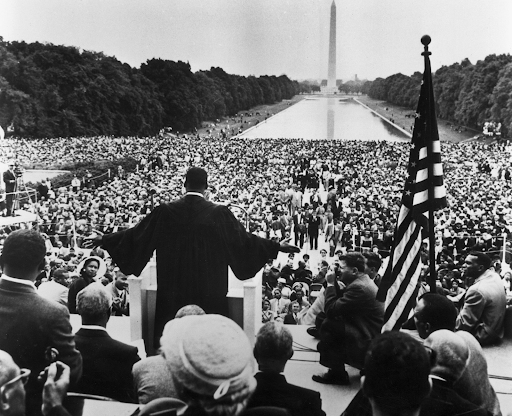
Among the many important figures remembered each February is Dr. Martin Luther King Jr., whose leadership during the civil rights movement reshaped the legal and moral landscape of the country. His legacy, like Woodson’s, is a testament to the power of persistence in the face of systemic resistance, and a deep reminder of the human cost such progress requires.
As we mark this centennial, Black History Month stands at an ever-changing crossroads. In an era of renewed discussions of how history is taught and whose stories are told in classrooms, the mission Woodson set out on in 1926 feels as urgent as ever. He believed that knowledge of one’s history was not a luxury but a necessity, a deeply fulfilling source of strength, identity and collective power.
One hundred years later, that belief holds. The celebration he started in a single week has grown into a national month, and the history he fought to preserve has only deepened and expanded. Black History Month is no longer just a commemoration of the past. It is a living and evolving affirmation that this history — Black history — belongs to all of us and honoring it is how we build something better for the future.