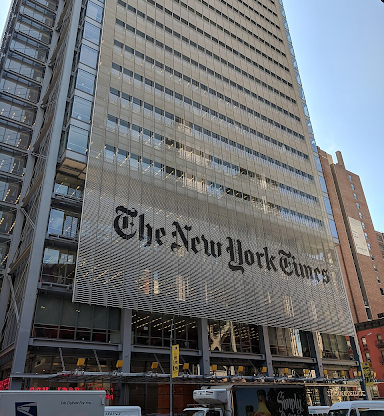
On May 5, The Equal Employment Opportunity Commission (EEOC) filed a civil rights lawsuit against The New York Times (NYT), claiming the news publisher failed to promote a white male employee based on his race and sex.
This case marks one of the biggest examples of the agency’s evolving approach to workplace diversity initiatives under the Trump administration.
The EEOC claims that the unidentified employee “did not match the race, and/or sex characteristics NYT sought to increase in its leadership through its diversity actions and aspirations,” pointing specifically to a multiracial female candidate who was advanced to the final interview panel.
In response, a Times spokesperson called the lawsuit “politically motivated” and said the company’s “employment practices are merit-based,” vowing to “defend ourselves vigorously.”
The New York Times lawsuit follows a months-long escalation against major employers. In February, EEOC Chair Andrea Lucas sent a letter directly to the CEOs and board chairs of the largest Fortune 500 U.S. companies. The letter warned that Diversity, Equity and Inclusion (DEI) programs factoring race or sex into employment decisions may violate federal civil rights law.
The EEOC was created to enforce Title VII of the Civil Rights Act of 1964 to combat workplace discrimination, which focuses on women and minorities. Congress established the agency to combat widespread, systemic workplace discrimination based on race, color, sex, religion and national origin.
One of the agency’s most effective tactics is targeting individual companies. The EEOC filed subpoena enforcement actions against Nike and sued Coca-Cola Beverages Northeast for sex discrimination. A 17 million dollar settlement was reached with IBM over its DEI practices and has required companies under investigation to hand over unusually large volumes of documents.
Since the start of President Trump’s second term, the EEOC has shifted their stance on diversity, equity, and inclusion (DEI). In an accompanying statement, Lucas urged corporate America “to reject identity politics as its solution to society’s ills.”
Additionally, in February, the EEOC voted to rescind their 2024 Harassment Guidance and dropped multiple EEOC-initiated lawsuits representing transgender Americans. The EEOC and the Department of Justice jointly issued technical assistance documents framing DEI-related employment decisions as potential violations of Title VII.
Under the leadership of Lucas, the commission has focused on what it characterizes as “reverse discrimination” specifically focusing their enforcement and public outreach on combatting purported discrimination against white men. In a video on X, Lucas publicly invited white men who feel that they have experienced workplace discrimination based on race or sex to file claims and recover damages.
The institutional and legal implications here are still unclear. Supporters of the changes argue that Title VII has always protected all workers equally, regardless of their demographic group. While critics of the EEOC’s new direction argue that the agency is misallocating its already limited resources.
It’s clear that with this decision, the lawsuit against The New York Times, one of the most symbolically loaded cases the commission could have selected, will not be the last of its kind.