Editor’s note: This article contains discussion around sexual violence and rape.
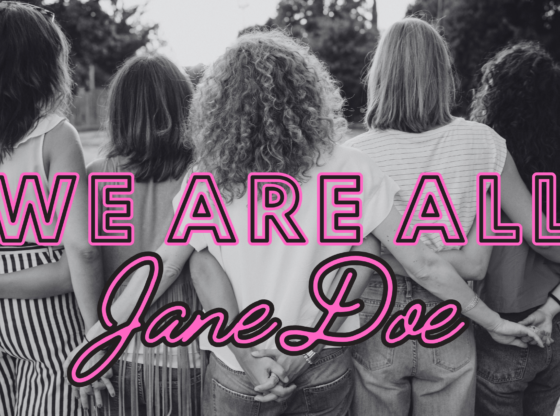
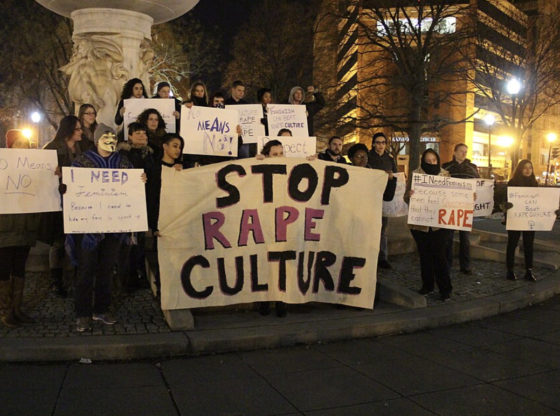
On Oct. 8, protesters around the nation rallied together in Washington, D.C. to protest against sexual violence and stand in solidarity with Jane Doe, a woman who recently came forward with a lawsuit against Cornell University for their handling of her alleged rape in 2024.
This protest was organized in part by DU alum Grace Wankelman (‘22), who helped spearhead the “Do Better” campaign at DU during her time as an undergraduate.
Before launching the campaign in winter of 2020, prior to the pandemic, there were two sides to campus: where some students understood the risks and realities around sexual violence even at DU, and others did not.
“There was also a side to the campus who I think genuinely thought there wasn’t really that much of a problem [regarding sexual violence] at DU,” said Wankelman.
Wankelman also discussed substantive policy changes at DU after 2020 and Chancellor Haefner’s action plan, which detailed possible solutions to the different issues brought up by the campaign’s organizers.
“I think the biggest areas where the campaign made a difference was in the culture,” she said.
The campaign reframed the way sexual assault was talked about at DU and how even something as small as laughing at a misogynistic comment creates a climate that allows for sexual violence to occur.
“There’s this impulse to protect reputations over humans and that’s definitely how it felt like to me, but then when we were able to launch [the “Do Better”] account and get it so that we had to have the hard conversations. But I think it was done in such a supportive way that really led to change happening and that was what I was the proudest of,” said Wankelman, reflecting on the campaign’s legacy.
In helping to organize the protest, Wankelman described being appalled by the news coming out of Cornell, prompting her to reach out to friends who were professionally involved with advocacy work. She was invited to join an organizing call where attendees were encouraged to initiate action in their own cities if there was not already anything planned. Wankelman noticed there was no D.C. action.
“Trump’s backyard and the city with the White House absolutely has to have an action. And so I just kind of got to work,” she said.
From there, Wankelman hosted organizers at her apartment building and even connected with another DU alum, Cheyenne Hunt (‘18), who is the founder of Reckoning Action, a nonprofit that confronts misogyny and gender bias in American public life.
According to Wankelman, Hunt originally had another event in New York on the day of the D.C. protest but changed her plans to attend and speak in Washington.
Hunt was also able to help get a number of different notable speakers at the protest. Alva Johnson, a survivor of President Trump’s assault and Dani Bensky, an Epstein survivor were both present. Addionally, journalist Aaron Parnas and Claire Barnett, president of Advocates Against Sexual Violence at Georgetown Law, also spoke at the protest.
Wankelman spoke at the protest and talked about Cornell’s Jane Doe but also Louisiana State University’s Kendall Francis, who was raped by an LSU football player. Following the event, he was suspended but the suspension was appealed and the school allowed him to continue playing football.
The rally began at Washington Monument and everyone who attended, including students from George Washington University, marched to the White House.
The protest’s location is an act of symbolism. “Understanding, [while] living in Washington, the way that the abuse of power at the very top is what creates cultures of violence on our school campuses. And we have to call that out” Wankelman said.
“Reflecting on it, it was by far the most powerful night of my life and I don’t think a single night has ever healed me more than that night,” she remarked.
Wankelman urges any current college students who are interested in advocacy work to not wait for anyone else to do it.
“Every single person has the ability to make a difference on this issue and we’re only going to see the change we need if people do step up and just start doing things in little ways instead of waiting for big moments or to do big actions. True change happens through small, consistent effort.”
If you or someone you know has been impacted by sexual assault or any other form of gender-based violence, you can find resources here. To get involved in advocacy for sexual assault survivors, DU provides a list of local programs and organizations.