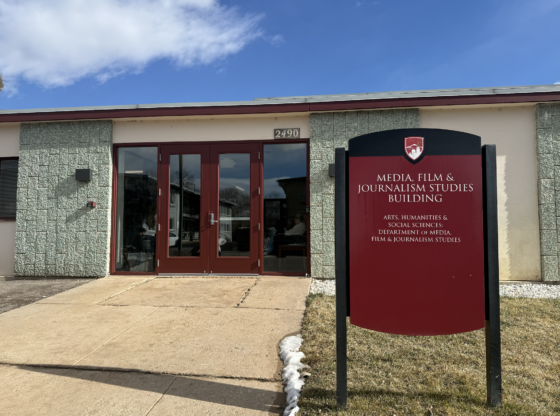
The Teller Indian School opened in Grand Junction in 1887, becoming one of the first Indigenous boarding schools in the Mountain West. The school was created as part of a federal forced assimilation program that removed Indigenous children from their families and aimed to erase their cultures.
Recent legislation has mandated research into the history of Indigenous schools within Colorado, which revealed data proving the death of many children on the campus.
History Colorado, an organization dedicated to delivering access to history and education, became an integral part in the land survey by analyzing data to discover the burial grounds. The survey occurred after data from old records surfaced showing that many students died on the campus.
History Colorado awarded a research grant to the Colorado School of Mines to survey the land where the Teller Indian School was located in order to discover the burial sites following the record information, but there has been minimal success.
While the Teller Indian School, now known as the Teller Institute, was one of the first in Colorado, other Indigenous boarding schools were running throughout the United States beginning in 1860. Some of the indigenous schools were funded by Christian churches in collaboration with government initiatives to eliminate Indigenous traditions and cultures by promoting Christianity and Western values.
The schools were modeled after the original Carlisle School, located in Pennsylvania. Colonel Richard Henry Pratt founded the Carlisle School because he believed that Indigenous children needed to be removed from their families and educated in Western environments. The motto of his initial institution was, “Kill the Indian, Save the man.”
In the schools, students were not permitted to leave the campus for five to 10 years. The schools were systematically constructed far from railroad tracks, preventing students from visiting their families and limited exposure to their own culture.
Students were also prohibited from speaking their Native languages and wearing traditional jewelry and clothing.Students were also forced to speak and write in English and play baseball. At the Teller Indian School, they were promised pay for their intensive labor, but the money was taken and used by the superintendent, never to be received by the students.
In 2021, the federal government established committees dedicated towards research on Indigenous boarding schools. The committees sought to address the atrocities committed and begin a reconciliation project.
Initiatives also began in Colorado to research the history and understand the events that happened at the Teller Indian School.
Federal grants have provided Colorado universities and organizations like History Colorado the opportunity to perform extensive land surveys on the Teller Institute campus, but none have successfully identified burial sites.
The community hopes to create a memorial to properly commemorate the children who died, but it has been difficult to identify them and where they are buried because the school’s records were damaged in a fire.
Indigenous children were sent to the Teller Institute from tribes all over the West, not just local tribes in Grand Junction. This has created more complications in understanding which tribes to commemorate and with contacting tribes to find out more information about the burial location.
Currently, Phillip Gover, director of Tribal and Indigenous engagement for History Colorado, is calling on anyone in the general public who has knowledge or a connection to the Teller Institute to come forward to help locate the burial grounds.