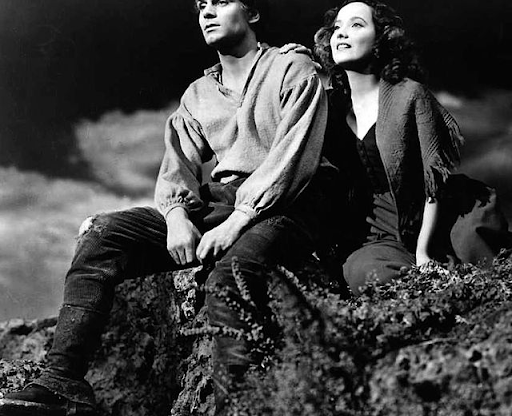
Emerald Fennel’s adaptation of Emily Brontë’s iconic novel, “Wuthering Heights,” was released in theaters on Friday, Feb. 13.
Australian actor Jacob Elordi, known for his roles in “Euphoria” and Fennel’s previous film “Saltburn,” was cast as Heathcliff, a role that has caused controversy for months due to the character’s portrayal and identity in the original novel. The controversy has resurfaced since the film’s release, with many critics arguing that Elordi’s portrayal diminishes the novel’s major themes.
Many critics say that the casting “whitewashes” the role, as Heathcliff was described as “dark-skinned” and was called a slur that is historically directed at Romani people. Themes of othering rely on Heathcliff’s nonwhite status in the novel, and erasing it completely makes the story “become a soap opera instead of an examination of societal systems.”
However, some literary scholars argue that Heathcliff’s race is deliberately left ambiguous.
“There’s a sense that he’s not Anglo-Saxon, he’s something else, but you don’t know what that is,” said Susan Newby at the Brontë Parsonage Museum in Haworth, England.
Scholars have theorized that Heathcliff could be mixed-race, and his identity is a commentary on the slave trade in Liverpool. Others say that Brontë was possibly commenting on prejudice against the Irish because when the character is first introduced, the descriptions almost exactly match caricatures of the Irish.
In previous movie adaptations of the novel, Heathcliff has been portrayed by white actors, except in Andrea Arnold’s 2011 adaptation, with Heathcliff being played by James Howson.
Whitewashing has been a recurring topic in Hollywood for years, with examples including Rooney Mara as the Native American character Tiger Lily in “Pan” and Jack Gyllenhaal in the lead role of “Prince of Persia.”
Along with whitewashing controversies, racially-blind casting or casting that does not take race or ethnicity into account, has also become a part of these conversations. While this philosophy of this kind of casting has given many people of color opportunities to play roles they never thought possible, it can also work against them, perpetuating harmful stereotypes for marginalized communities.
Prominent theater writer Diep Tran advocates a “color-conscious” casting method, which he explains as recognizing both the industry’s history of discrimination and the importance of showcasing performers of color.
Many critics argue that Fennel’s decision to cast Elordi solely based on how she imagined Heathcliff while reading the book is unjustified.
“When you cast Jacob Elordi, a white Australian actor, you aren’t just making a creative choice. You are erasing the very engine that drives Heathcliff’s vengeance. Without the racial and class-based alienation, he’s just a tall, brooding guy who’s a bit of a jerk,” wrote Chelsea Hui in a recent review of the film.
Others say that Fennel’s adaptation of the film was never going to handle this difficult subject matter well, so Elordi’s casting was for the best.
“I just genuinely didn’t expect this to be a nuanced rumination on class, race, desire and abuse from this movie,” wrote Kathleen Newman-Bremang.
Ultimately, it is up to the viewer to decide how to view the movie: as a poor adaptation of a classic novel or as one that uses only the novel’s iconic title and characters, shrouded in pretty costumes and A-list actors.