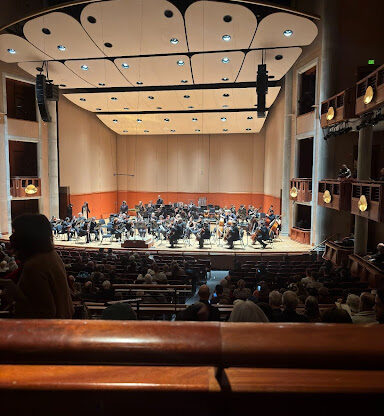
On Feb. 4, the Newman Center for Performing Arts was alive with sound from the Lamont Symphony Orchestra. From 7:30 to 9:30 p.m., the audience experienced an evening of nostalgia and classical brilliance.
Led by conductors Bryant Denmark and Ke-Yaun Hsin, the orchestra glided the audience through a musical story of whimsy, drama, dance, nostalgia and time.
Beginning the night with “Overture to Die Fledermaus” by Johann Strauss II, performers brought a light and witty energy to the stage. With violins swirling, winds chiming in and accompaniment by brass, this piece showcased what it sounds like to be enthralled in an elegant chaos of a dance. A sense of celebration filled Gates Concert Hall with an energetic reminder that orchestral music can be theatrical.
Carried forward by a repeating bass line, the audience heard “Passacalgia from Peter Grimes” by Benjamin Britten. This was a short piece that packed an emotional punch. The layering strings caused a darker harmony with the violin solo that felt like a voice trying to rise above the power of the orchestra. This piece had a haunting depth, exposing what it feels like to be vulnerable and human. The orchestra surged at the end, eventually overwhelming the solo, completely grasping the audience’s senses.
Moving away from the heaviness, the orchestra switched tones to a warm, relaxed and slightly jazzy piece. “Dances in the Canebrakes” by Florence Price, orchestrated by William Grant Still, was a three part rhythmic dance sound that blended early 20th century blues with orchestration adding some swing into the sound.
The first song titled “Nimble Feet” was built on syncopation of early jazz. Capturing joy through sound, the piece makes the audience feel light on its feet, with dance embedded in the music’s DNA.
The second piece of the three-song set was titled “Tropical Noon.” The early jazzy sound blossoms into an atmospheric space with muted strings and gentle wind sounds.
The piece concluded with its final movement of “Silk Hat and Walking Cane” bringing the previous warm and relaxed sounds of a new day into the swagger of the night. The brass and woodwinds added charm and style to this new beat, bringing the listener through time.
The intermission was followed with two final performances of “Knoxville: Summer of 1915” by Samuel Barber and “Symphony No. 64” by Joseph Haydn.
“Knoxville: Summer of 1915” was filled with singing violins and cellos that were the backbone of the piece. The woodwinds complimented the strings perfectly, echoing their emotional power. The oboe was most notable adding a childlike brightness to help paint a picture of music. The horn offered a sound of memory and nostalgia that did not overpower the soft yet prominent harp and percussion sounds.
Joseph Haydn’s “Symphony No. 64” was expressed in four movements. The medley started off with a lively burst of forward motion, which gave the piece a confident start. The sudden burst of optimism came to a halt as the second act began with harmony carried by wonder as it drifted in unexpected directions. The third movement started to knit together into a sturdy dance song with personality. The finale was fast paced and filled with momentum, adding several joyful twists to wrap up the set.
The Lamont Symphony Orchestra carried its audience through multiple themes and emotions on Wednesday evening, leaving one to reflect on their own timeline through life. The performances were a wonderful reminder of reflection and what it means to be human.