This article is part of the Clarion’s Week in Review series, covering current events that shape the conversations on our campus.
This last week brought major headlines domestically and internationally, as U.S. courts grappled with high-stakes cases, Peru swore in its seventh leader in less than a decade and the first steps of the fragile Hamas-Israel ceasefire unfolded while world leaders convened at a peace summit.
ACLU Colorado sues Trump administration to stop “indiscriminate” ICE arrests
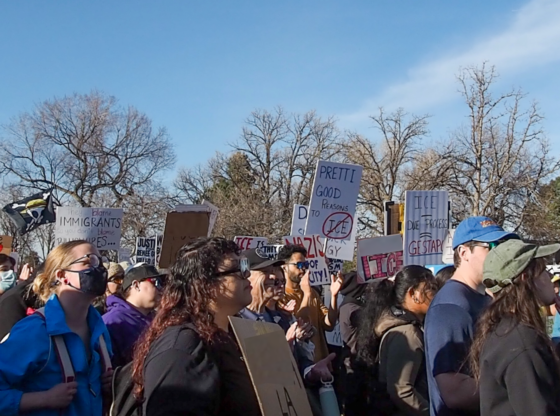
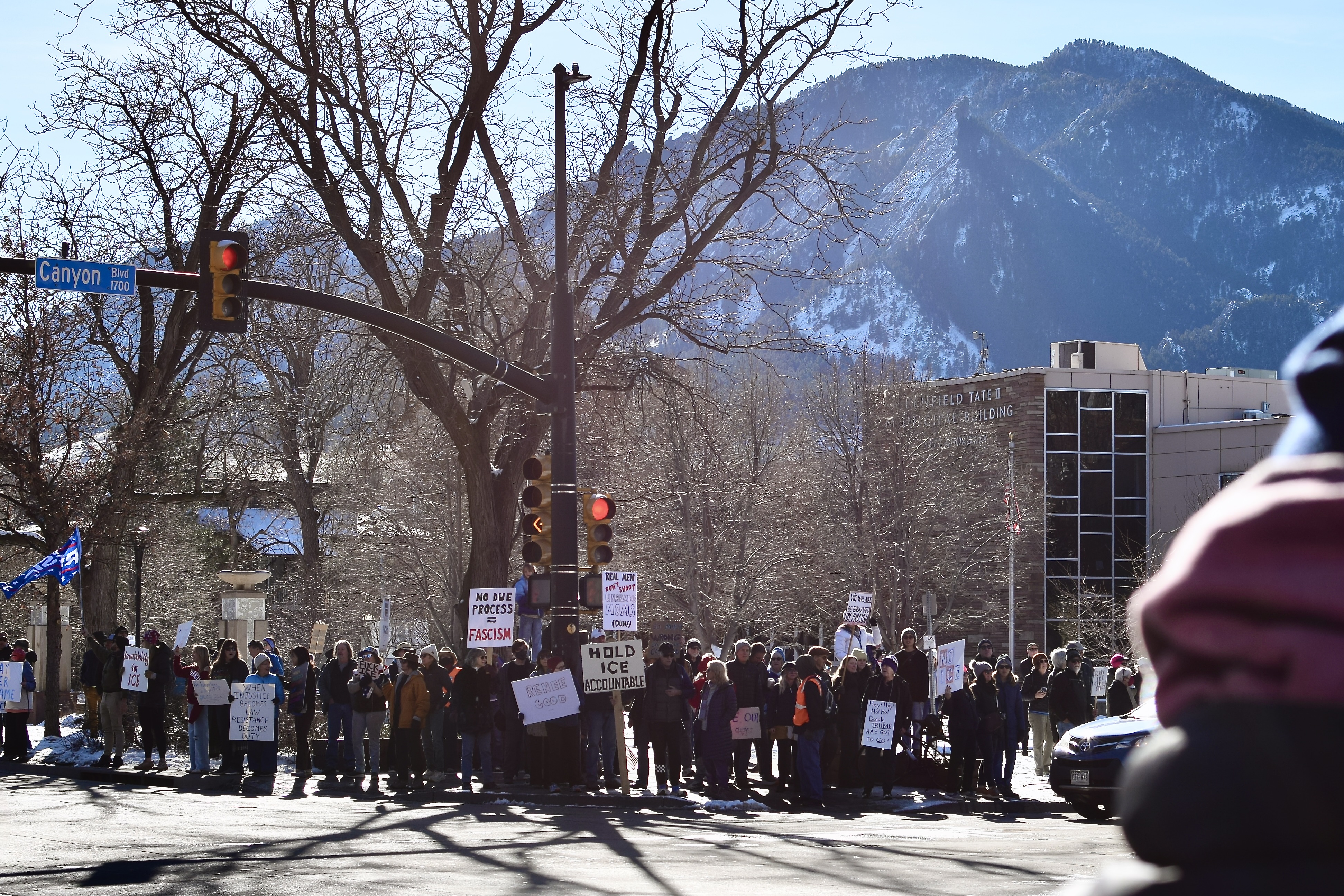
The Colorado chapter of the American Civil Liberties Union (ACLU) and two Colorado law firms filed a lawsuit against Trump administration officials on Oct. 9, seeking to restrict Immigration and Customs Enforcement (ICE) officials’ authority to detain people without judicial warrants.
The lawsuit, brought on behalf of four people who were allegedly arbitrarily detained earlier this year, claims ICE agents are arresting individuals without determining probable cause and flight risk, requirements they must evaluate case by case for each person detained.
Instead, the legal groups argue, their clients were apprehended based on their “skin color, accent or perceived nationality” to meet quotas they argue have been unlawfully set by Trump administration officials.
The lawsuit also requests a class certification for “people who have been or will be subject to ICE’s warrantless arrests,” allowing the plaintiffs to serve as representatives in a class-action lawsuit and potentially extending any ruling to others similarly affected by the agency’s practices.
Supreme Court to hear arguments on Louisiana redistricting case
On Oct. 15, Louisiana Attorney General Liz Murrill will ask the Supreme Court to bar states from considering race when drawing congressional districts. She’s arguing that the Voting Rights Act (VRA) provision that sometimes compels race-conscious redistricting has become obsolete.
In 2022, a federal court ordered Louisiana to redraw its congressional districts based on that provision after a group of voters sued, claiming the state had unconstitutionally diluted the power of Black voters. The new map created two Black-majority districts instead of one. That map is now being challenged by non-Black plaintiffs.
The case, Louisiana v. Callais, is the latest in a long list of lawsuits challenging how states draw congressional districts. These cases focus on the difficult balance between avoiding racial discrimination and complying with federal laws like the Voting Rights Act (VRA), which sometimes requires considering race to protect the voting rights of marginalized groups.
Because Republicans hold a slim majority in the House, how the case is decided — and thus, how the district maps are ultimately drawn — could have significant consequences in the upcoming midterm elections.
Peruvian Congress ousts President Boluarte amid crime increase
On Oct. 10, Peru’s Congress voted to remove President Dina Boluarte from office, citing her government’s inability to combat rising crime and “permanent moral incapacity.” Congress leader Jose Jeri, now the country’s seventh leader in less than a decade, was sworn in as interim president.
Then-Vice President Boluarte succeeded former President Pedro Castillo after he was imprisoned in December 2022, when he attempted to dissolve the legislature to prevent his own impeachment.
Several scandals and a surge in crime, including a shooting at a concert in Lima on Oct. 9, ultimately led to what was the ninth attempt to impeach Boluarte, this time supported by nearly all of Peru’s legislative factions.
Boluarte was one of the world’s most unpopular leaders, with an approval rating of 2 to 4 percent. In the first three months of her presidency, there were more than 500 protests calling for her resignation.
Hostages and prisoners freed as part of Hamas-Israel ceasefire agreement
On Oct. 13, Hamas released 20 Israeli hostages in exchange for 2,000 Palestinian prisoners as a key first step in the ceasefire both sides agreed to last week. Meanwhile, President Trump traveled to Egypt to attend a summit on the future of Gaza and the broader Middle East with leaders from more than 20 countries.
In the West Bank, crowds gathered in Ramallah to celebrate the return of 88 Palestinians released from Israeli prisons, where they had been serving life sentences. Meanwhile, Gazans in Khan Younis welcomed 1,700 Palestinians detained without charge since Oct. 7, 2023. About 160 Palestinians were deported through Egypt following their release.
In Tel Aviv, 65,000 Israelis assembled to welcome the 20 remaining Israeli hostages, who spent 737 days in captivity in Gaza. They were reunited with their families at a military base before undergoing medical evaluations.
Meanwhile, world leaders in Sharm El Sheikh, Egypt, began a peace summit “to end the war in the Gaza Strip, enhance efforts to achieve peace and stability in the Middle East, and usher in a new era of regional security and stability,” according to Egyptian President Abdel Fattah al-Sisi.
Neither Israeli officials, including Prime Minister Benjamin Netanyahu, nor representatives from Hamas are expected to attend the summit.