This article is part of the Clarion’s Week in Review series, covering current events that shape the conversations on our campus.
This past week saw major stories unfolding domestically and abroad, as political unrest and extreme weather swept the U.S., tensions eased between Pakistan and Afghanistan with a ceasefire agreement and Bolivia elected a center-right president in a historic runoff.
Millions across the U.S. attend No Kings protests
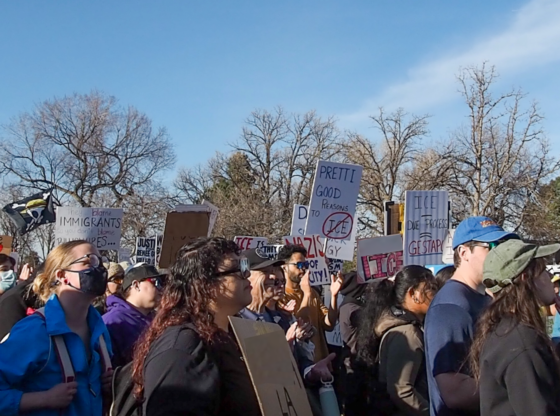
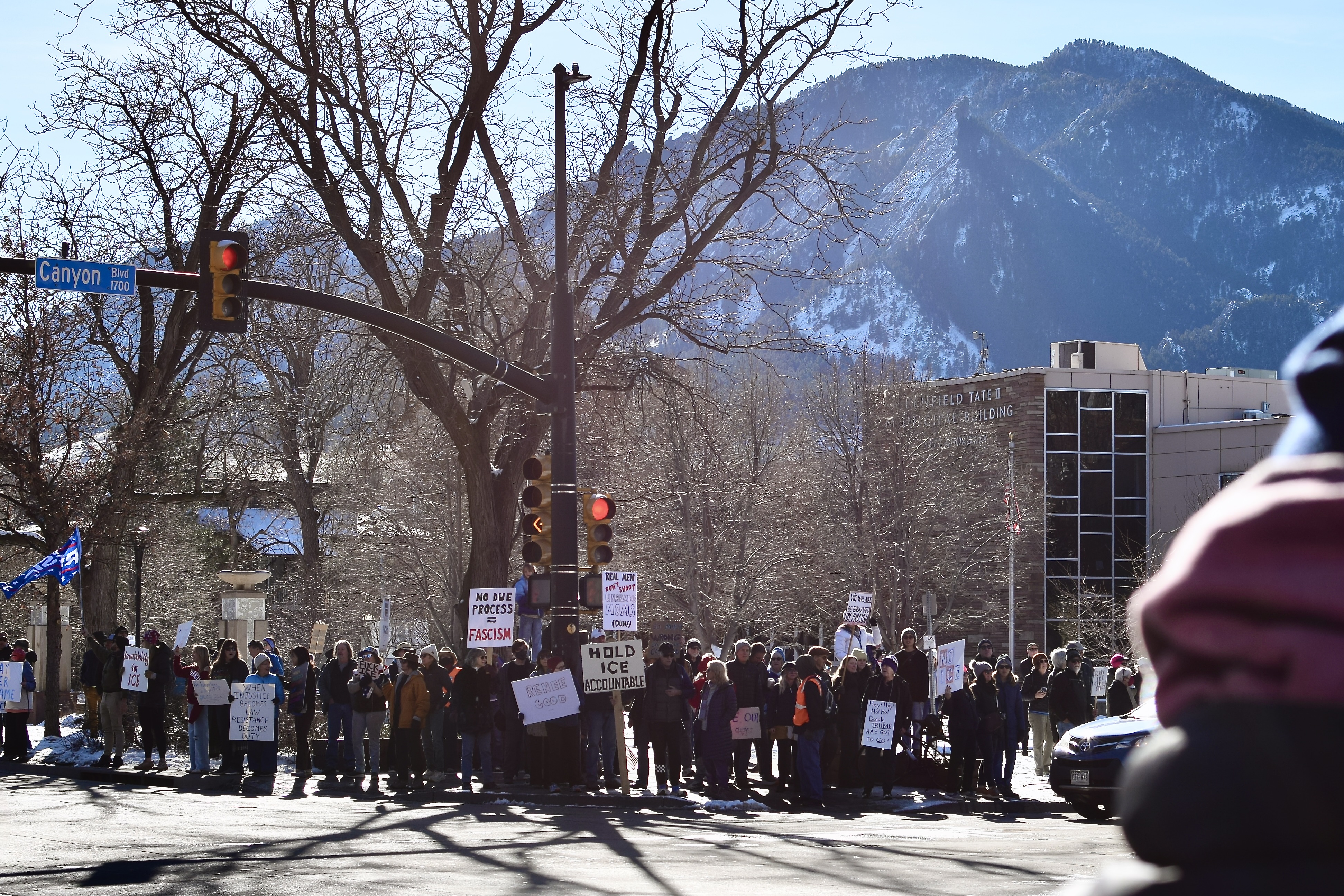
Cities across the United States saw more than seven million people protesting President Donald Trump’s policies on Oct. 18, according to organizers of the events. In Colorado, thousands gathered across the state, from Westcliffe — a town of less than 500 people — to the State Capitol in Denver.
The first “No Kings” protests were organized by a coalition of hundreds of political action groups earlier this year, with the demonstrations coinciding with President Trump’s military parade in June.
Local organizers said the second wave of protests drew more than 25,000 concerned Coloradans to march through downtown Denver, including several University of Denver students.
“What I took away from the protest was how important mobilization and solidarity are, but it has to be continuous in order to be effective,” Alex Wong, a second-year harp performance student, said.
Storm surge causes extreme damage and mass evacuations in Alaska
On Oct. 12, Alaska was hit by the remnants of Typhoon Halong, which approached the state with the force of a Category 2 hurricane. Small communities in remote areas were devastated by the storm, and evacuees now may not be able to return home for over a year.
More than 2,000 people have been displaced, mostly from the towns of Kipnuk and Kwigillingok, which were hit hardest by the storm surge. Officials say that the rescue effort alone was one of the largest coordinated air evacuations in Alaska’s history.
Many survivors are now being flown to Anchorage, but the unusual timing of the storm will make already difficult repairs much harder. In Kipnuk, 90 percent of homes have been destroyed. One person died and two are still missing.
State leaders have urged President Trump to approve a major disaster declaration, which could provide evacuees with federal assistance. Gov. Mike Dunleavy has said that many will not be able to go back to their homes for at least 18 months.
Afghanistan and Pakistan declare immediate ceasefire following violent clashes
On Oct. 19, Afghanistan and Pakistan agreed to an immediate ceasefire after over a week of violent clashes along the countries’ borders that have killed dozens and injured hundreds. The truce was mediated by Qatar and Türkiye.
Tensions between the two nations have been simmering for months, with Pakistani officials claiming that rebel groups attacking the country across the border were being sheltered by Afghanistan.
Taliban officials have denied the accusations and, in turn, accused Pakistan of spreading misinformation to justify cross-border attacks and harboring ISIS-linked fighters to destabilize Afghanistan.
The violence escalated earlier this month with a suicide attack that killed seven Pakistani soldiers and injured 13, officials said. On Oct. 16, the United Nations Assistance Mission in Afghanistan (UNAMA) confirmed that in Afghanistan, at least 37 civilians had been killed and 425 wounded.
Bolivia elects center-right president in runoff election
On Oct. 20, Bolivians elected center-right senator Rodrigo Paz in runoff elections after nearly twenty years of political dominance by the country’s Movement Towards Socialism (MAS) party.
Preliminary results showed that Paz’s far-right opponent, Jorge “Tuto” Quiroga, won 45.4 percent of the vote while Paz secured 54.6 percent, though the official tally may take up to a week to be released.
The election was the first presidential runoff for Bolivia, as well as the first presidential election since 2005 without a candidate from the MAS party. Paz will inherit the country’s worst economic crisis in forty years, with annual inflation at 25 percent.
His victory marks a political shift in Bolivia, where he has promised to rebuild the national economy, restore institutional trust and restore diplomatic relations with the United States. The countries have not had a formal diplomatic relationship since 2008.