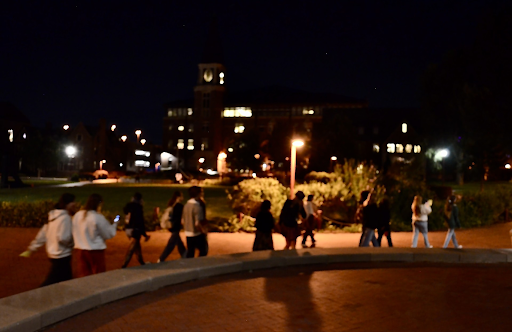
On Sept. 24, 2025, the University of Denver’s Feminist Student Alliance (FSA) led a night walk to educate attendees about feminist architecture and explore campus to identify safe and unsafe spaces for women, girls and non-binary individuals after dark.
Led by FSA’s vice-president, Julia Hubert, the night walk aimed to reclaim access to education by documenting what made participants feel either safe or unsafe as they walked together in a large group. Participants were encouraged to take their own pictures and hold up a red or green piece of paper at different locations. Holding up the red piece of paper indicated that something made them feel unsafe on campus and a green piece of paper indicated that something made them feel safe.
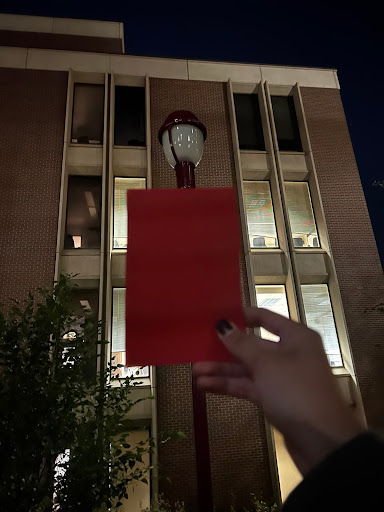
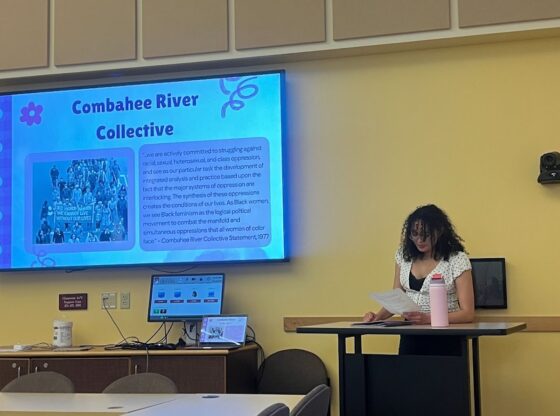
Before the walk began, participants listened to a presentation on what to look out for on the walk. Areas that were dimly lit, had overgrown shrubbery or had restricted sight in the dark, were deemed potentially hazardous design choices. In contrast, more well-lit, open and welcoming areas exemplified feminist-friendly architecture.
Hubert was inspired by her own experience participating in an “Artist-Led Night Walk” in Louisville, Ky., as well as her own passion for feminist architecture.
Hubert, a fourth-year socio-legal studies and political science major, explained that “Traditional urban planning and architecture often assume a default user: an able-bodied male. Feminist architecture seeks to design spaces that are inclusive of women, gender-diverse people, caregivers and people with disabilities, allowing them to thrive instead of just survive.”
Regarding why feminist architecture is essential on college campuses, she explained that women and gender-diverse individuals should not have to fear walking home from class, which creates a significant barrier to education based on gender.
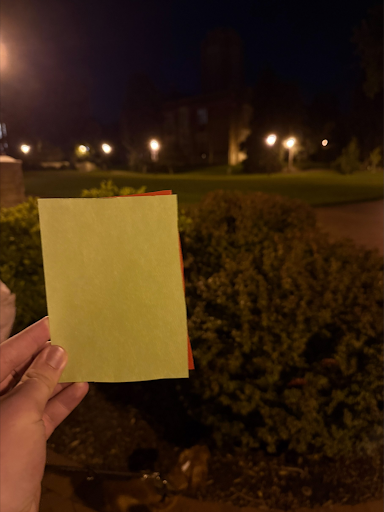
Hubert, as well as FSA’s president, fourth-year Yoli Ramirez Tamez, have expressed interest in enacting real change through this night walk on campus. Hubert has made plans to send her report of FSA’s findings from the event to those who led the night walks in Louisville for potential recommendations on how to move forward. Ramirez plans to collaborate with DU’s Campus Safety, as well as the Health and Counseling Center (HCC), to inform officials about potentially hazardous architectural choices and possible on-campus solutions.
DU’s FSA aims to host more events focused on education and advocacy in the future. Follow them on Crimson Connect and Instagram for more information about future events.