The start of the Trump administration brought forth a plethora of controversial policies, one of those being the cutting of diversity, equity and inclusion (DEI) programs and initiatives across the nation. With Ivy League schools like Harvard and Brown University succumbing to the threats of cutting national funding if they don’t comply with Trump’s policies, institutions across the country have valid reasons to bend the knee.
On July 30, 2025, a memo from the Department of Justice incited a nationwide fear, declaring that DEI is “dangerous, demeaning, and immoral.” The memo states that programs and scholarships exclusively for people of a specific racial background are an unlawful practice (ex. “Black Student Excellence Scholarship”).
The memo also defines a training session “that requires participants to separate into race-based groups (e.g., ‘Black Faculty Caucus’ or ‘White Ally Group’) for discussions” as unlawful segregation.
“We have not experienced any direct outreach from the Trump administration,” Chancellor Jeremy Haefner stated in an interview with 9News. Despite this, Chancellor Haefner publicly announced that DU cut back all DEI training for staff and any scholarships and programs offered exclusively to students of diverse racial backgrounds.
In a statement letter from the Office of the Chancellor to faculty members, Haefner attempted to soften the concern by claiming that DU would continue to support inclusive excellence, while also following the Department of Justice’s orders.
“We must take the DOJ’s new interpretation seriously and make appropriate adjustments. Not doing so could have serious consequences for achieving DU’s mission, including potentially losing many millions of dollars in federal support, which would jeopardize life-changing research, students’ access to federal financial aid, and create other personnel and operational impacts,” Chancellor Haefner stated in his letter posted on Aug.19, 2025. His reasoning behind this decision was to avoid the possibility of federal funding freezes.
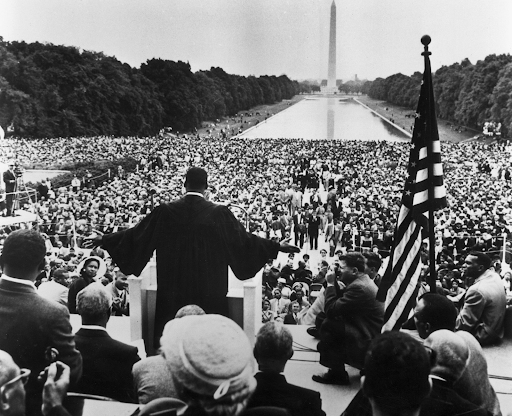
Although DEI has no official consensus, its roots are planted in the Civil Rights Act of 1964, in which the act made discrimination on the basis of gender, race, color, religion and nationality illegal in employment. Cutting back on programs that were made with the sole reason to empower marginalized communities are now being scaled back, with long term effects uncertain.
According to a Forbes article examining the history of DEI, the author found that, “DEI is not a stand-alone strategy or initiative. Organizations will stay committed to this work because they realize diverse representation is a fact (and is only increasing), people expect fairness at work (equity) and people cannot do their best work when they feel excluded.”