For decades, college athletes were expected to bring in millions of dollars in revenue for their universities without ever seeing a paycheck. Jerseys were sold, arenas filled and television deals soared, all while players remained unpaid under the NCAA’s strict “amateurism” model. As of this summer, that era is ending.
In June 2025, the NCAA reached a landmark $2.8 billion settlement in House v. NCAA, a class-action lawsuit that fundamentally reshapes college sports. The payout will be distributed over 10 years to current and former Division I athletes who competed before the arrival of name, image and likeness (NIL) rights in 2021.
The bigger shift is what’s coming next. Under the agreement, universities will be allowed to share up to roughly $20 million annually in athletic revenue directly with their players.
That means athletic departments, including smaller programs like DU, will have to think differently about how they budget, recruit and retain athletes.
In August, the University of Denver announced Peter Mannino as its new Assistant Athletic Director for Name, Image and Likeness (NIL). The 2008 DU graduate will oversee the university’s NIL strategy and education programs for all varsity sports. He will also monitor national NIL trends to ensure DU remains compliant with NCAA, state and federal regulations.
Vice Chancellor for Athletics Josh Berlo said the hire was important to finding an administrator passionate about supporting and guiding DU into a new era of intercollegiate athletics.
“I’m confident that Peter Mannino is the right individual to lead us forward into the post-House NCAA landscape and internally-managed NIL space,” he said.
Mannino said “this is the new reality of college athletics.”
The House case builds on the NCAA’s 2021 decision to allow athletes to profit from their name, image and likeness (NIL).
For the first time, athletes could sign sponsorship deals, monetize social media or host camps under their personal brand. It blurred the line between college and professional sports, especially as high-profile collegiate athletes began earning six-figure deals.
At DU, NIL has been handled slightly differently than some of the bigger schools but it has given student-athletes a voice and visibility they’ve never had before.
Still, NIL comes with inequality. Power Five programs with massive fan bases and donor networks saw athletes sign major deals, while smaller schools often struggled to keep up.
Over the summer, Pennsylvania State University signed a standout hockey player, Gavin McKenna, whose NIL deal was reportedly worth nearly $700,000, a figure made possible by the financial influence and visibility of a Power Five program. For smaller schools pulling together a deal of that size in such a short time would be far more difficult, highlighting the growing gap between large conferences and mid-major programs.
The new model is expected to prioritize sports that generate revenue, typically men’s basketball and football, but DU’s strong representation in non-conventional sports, including women’s gymnastics, skiing and hockey, the new landscape brings both challenges and opportunities.
Revenue-sharing will likely come from existing athletic budgets, meaning departments will have to make tough choices. Smaller sports may feel the pinch if funds shift toward programs that bring in more visibility or success.
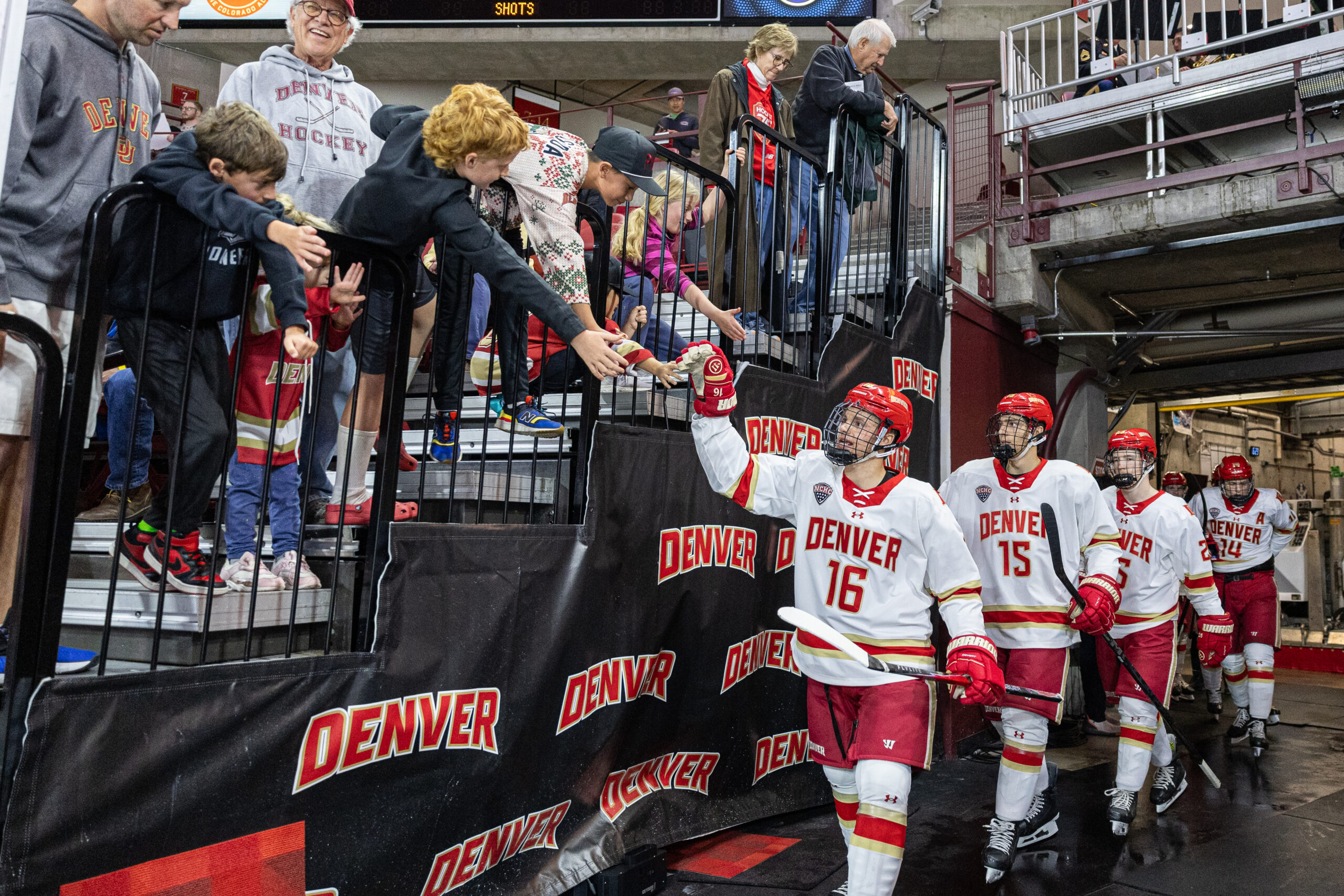
DU’s hockey program, fresh off another deep tournament run, will remain a centerpiece of the school’s athletic identity. But maintaining that excellence will require adapting to the evolving economics of college sports.
“DU has the ability, without football and without high major college basketball, to not have to rush in this space and do it the Denver Way,” said Mannino.
To prepare for this transition, DU Athletics is working closely with departments across campus to ensure student-athletes are supported both academically and financially. Partnerships with the Daniels College of Business (DCB) and the Sturm College of Law are helping athletes understand the basics of marketing, brand management and contract negotiation.
“The educational integration will provide real word and resume building experience for Daniels and Sturm students around business plan development and contract guidance for student-athletes exploring NIL deals,” says Mannino.
These collaborations are designed to help athletes navigate NIL and the coming revenue-sharing model responsibly, while also building skills that extend beyond sports.
Despite the changing financial landscape, Mannino has confirmed that the settlement will not affect tuition or student fees. While DU, like many institutions nationwide, faces budget adjustments and departmental cuts, NIL and revenue sharing are funded separately through athletics-specific revenue sources, donations and sponsorships. That means DU students won’t see their tuition rise because athletes are being paid.
One of the biggest questions still looming over the House settlement is equity. How will the money be distributed and will all athletes benefit equally?
While the NCAA’s framework allows schools to share up to $20 million in annual revenue with student-athletes, DU officials say it’s uncertain whether the university will reach that figure. The cap is primarily designed for larger Power Five programs with major football or basketball revenue streams, not smaller, private institutions like Denver.
“With most institutions committing 75% of their revenue sharing/NIL to football and DU not having football, the initial amounts will be material, but modest,” said Mannino.
How those funds will eventually be distributed among student-athletes also remains to be seen. It’s not yet clear whether DU will compensate players equally across sports, specific rosters or if individual athletes could earn more based on performance, playing time or marketability.
At DU, the focus remains on finding a model that reflects the school’s values of fairness, balance and opportunity. Mannino said the university’s approach will prioritize student development over headline-grabbing numbers.
“A way that prioritizes academic partnerships, a way that allows us to continue a broad-based athletic excellence and a way that is sustainable in the long term while educating, empowering and supporting our student athletes,” says Mannino.
If you’re a DU student wondering how this affects you, here’s the takeaway:
- Athletes will be paid. The NCAA settlement opens the door for direct compensation from schools starting during this academic year.
- Name, Image and Likeness (NIL) remains key. Student-athletes can still earn from endorsements, brand deals and personal ventures.
- Budgets will shift. Athletic departments may have to redistribute funds, but not from tuition or academic programs.
- Campus culture will evolve. As college sports become more commercialized, expect more conversations about fairness, identity and what it means to represent DU.
The business of college sports is changing, but at Denver, the mission — excellence on and off the ice, field or court — remains the same.