15-year-old Ghanaian Javits Frimpong was shot and killed on Oct. 29 on his way to school in the Bronx. Harrowing CCTV footage of him running away from his alleged assailants in fear for his life circulated on the internet.
My heart aches for Javits and his family. As a child of African immigrants myself, this reality is known all too well in our communities. Our parents sacrifice everything to come to America for a better future, and before they know it, that future is ripped away.
Words fail to describe the grief that I feel, and I am only an observer. I cannot imagine how his family must feel, especially Javits’ father, Thomas Frimpong. Javits was living with his father after moving from Ghana to New York City in 2025. Frimpong told reporters he believed his son was being bullied before the shooting. The case now opens the question of whether an investigation of bullying at Javits’ school will ensue.
A moving vigil hosted by the National Ghana Parade Council was held in Javits’ honor. Balloons were strung on fences and signs lined up with writing that read “Justice for Javits” as neighbors gathered together in remembrance. Although the Frimpong family did not attend this vigil in light of their grief, it was a powerful symbol of community in the face of xenophobia.
I believe I can speak for many African-Americans when I say that we are tired of grieving. Unfortunately, Javits’ case is not isolated. Black children in America die from gun violence at alarming rates. Earlier this year, Kohen Wiley, a Black one-year-old infant, was shot and killed by a police officer in Mississippi.
Black children in America deserve to grow up. They deserve to live past the age of one and 15. Black children in America deserve to graduate high school and college. They deserve to see their families grow through generations.
The system has failed us in all aspects of life, including economic power, health care and the justice system. It is horrifically astounding that in the year 2026, Black people in America are still not fully liberated from the effects of slavery. Our right to vote was only protected since 1965 (only 61 years, my father’s and Frimpong’s age), and even that was not enough to protect us from gerrymandering and voting intimidation.
The bullying of Black people is entirely too normalized, from the classroom to social media. I’ve seen videos discussing how reaction images in TikTok comment sections seem to be solely of Black people, and how viral sound clips are taken out of context of Black people grieving to be turned into lighthearted memes, known as digital Blackface.
Take the movie “Precious,” for example. Many people might recognize the sound clip “since you got your degree, and you know every f****** thing.” What people may not know, however, is that the movie is about a young Black girl who is pregnant with a child, enduring abuse from her mother after experiencing sexual abuse at the hands of her biological father.
Similarly, the movie “Hidden Figures” features the sound clip “and I work like a dog, day and night, living off of coffee from a pot none of you want to touch!” This movie, which I first watched in the sixth grade, is about three Black female NASA mathematicians during the Space Race as they dealt with segregation.
Another example that comes to mind is the sound clip “Oh, my God. My Shayla. This is all I got. Don’t take my baby…” The context of this clip comes from actor Tyrese Gibson pleading for his daughter during a custody battle in 2017.
This is not to shame people who may have been ignorant of the origins of these clips. However, it is a critique of the culture that viralizes Black suffering to the point of normalcy.
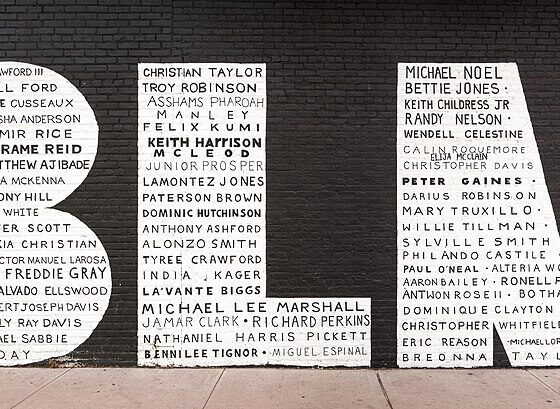
Black people are more than their grief; they are wildly diverse, expressive and full of life that is robbed from them.
Justice for Javits Frimpong, and justice for the countless other Black lives that have left this Earth too soon.