Photo by: Cameron Lemmon
When Republican presidential candidate Mitt Romney spoke at the Sturm College of Law last Tuesday, politically active students reacted in two very different ways.
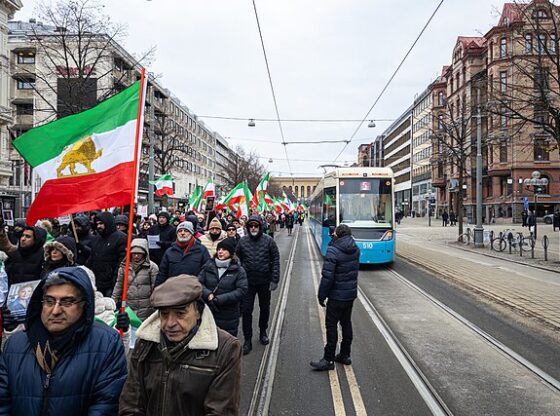
The DU College Republicans attended, listened to and applauded Romney’s speech. Meanwhile the DU College Democrats stood outside with signs protesting Romney’s stance on such issues as reproductive rights and Guantanamo Bay
Senior Jeffrey Graves, the current president of the DU College Democrats, spoke optimistically about his organization’s views.
“The truth is on our side,” said Graves. “I think that’s really going to help us in what we’re trying to do this year. Our main goal is voter registration for students. Young people overwhelmingly vote Democrat, so we feel that’s going to help us in a big way.”
DU College Republicans president, sophomore Kevin Poyner, offered a different take on the issues.
“It’s tough to get involved right now since we can’t endorse one [Republican] candidate over another,” said Poyner. “The undergrads did help to plan the Romney speech. We’re mostly concerned with arranging events for our members so they can listen to, talk with and understand the candidates.”
Graves elaborated the Democrats’ agenda. “Our main issues are the Iraq War and the slashing of student benefits,” he said. “We think it’s ridiculous that President Bush can slash a child healthcare bill saying it’s too expensive, and then turn around and ask for another $168 billion to fund the war.”
Poyner said Romney’s appearance is one way to educate his group’s members about the issues. “Our main concern is educating our members about the issues,” said Poyner . “We want to promote productive intellectual political discourse. We’re not interested in getting into any hot, nasty political debate. We want to be productive, not sensational.”
The two groups have encountered no friction on campus, according to Graves, who said, “They’ve been very cordial and respectful. We try to return the favor. We could have marched into Romney’s speech with our protest signs, but we chose to stay outside to allow him space to give his speech unmolested.”
Graves conceded that “Ideological differences lead to some conflict, but it’s mostly between individuals, not organizations.”
Poyner had different sentiments. “We’ve had good interactions with the College Democrats from the law school. Our interactions with the undergrad College Democrats haven’t been so productive. There’s an air of immaturity with them.”
Graves disagreed.
“We’ve had trouble contacting the College Republicans,” said Graves. “We want to host debates throughout the year, but they don’t seem interested. I’ll just go ahead and issue a public challenge to debate the College Republicans anytime, anywhere.”
“We don’t try to make a scene,” said Poyner. “We want to promote mature political debate and discourse. Not all liberal groups on campus share that goal.”
Students interviewed at the Romney event had varying opinions.
Sophomore Dylah Werbner agreed with the protesters, but not their methods.
“It’s embarrassing,” she explained. “I tend to agree with the College Democrats, but they’re not doing any good yelling outside. The people making a difference were listening to the speech and asking tough questions. It was a fantastic opportunity to further the debate and expose Romney’s weaknesses as a candidate, and they wasted it.”
Evan Corzine, a junior, said, “I think it’s cool that Romney even came, but I understand the protest. The College Democrats aren’t protesting Romney being here. They’re protesting his policies.”
Despite ideological differences, Graves and Poyner do see eye to eye on at least one issue.
“Politics is overlooked on this campus,” said Poyner. “The only attention is given to the sensational mass protests and rallies. Otherwise, the student body is apathetic.”
“There’s not enough involvement,” said Graves. “Students tend to delude themselves into thinking politics is dry and boring. But we can make a difference. All we have to do is get out there and try.”