Following the tragedies in Minnesota, concerns about Immigration and Customs Enforcement (ICE) activity continue to grow nationwide. Students at the University of Denver (DU) are asking a pressing question: What would happen if immigration enforcement agents came to campus?
President Donald Trump’s views on Colorado and its state officials are well known. Given the administration’s negative stance toward the state, city officials and community advocates are warning of a possible surge in ICE activity in the Denver area within the next few weeks. This prospect has raised concerns at universities across Colorado, including at DU.
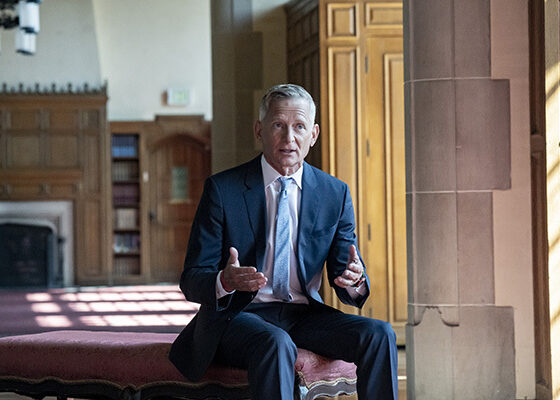
Last week, the Clarion sat down with Chancellor Jeremy Haefner to discuss students’ worries and outline DU’s protocols and legal limitations.
Haefner acknowledged the prominent concerns surrounding immigration enforcement, noting that ICE has become one of the issues most frequently raised to him by students, staff and faculty.
According to Haefner, DU has established clear protocols for any potential encounter with federal immigration agents. If an ICE officer approaches a community member on campus or in the areas immediately surrounding it, the university instructs them not to grant access or provide information. Anyone approached should contact Campus Safety or the Office of General Counsel immediately.
“Physical safety of people is the most important thing,” Haefner said. As enforcement situations can be unpredictable, he emphasized that students and faculty should avoid putting themselves at risk.
“We support your First Amendment rights,” he said. “But at the same time, those rights and personal safety can sometimes be in tension. It’s a tricky balance.”
One key point Haefner clarified is the difference between public and private spaces on campus. Areas open to the public — such as Anderson Academic Commons, Community Commons and the Ritchie Center — are considered public spaces and therefore accessible to immigration enforcement.
Private spaces on campus, such as classrooms, residence halls and administrative offices, are not. Haefner said he doesn’t “see why [ICE] would be able to gain access to dorms,” emphasizing that legal authorization, such as a judicial warrant, are required to access these areas.
When asked what the university is doing for international students, Haefner said DU is trying to increase outreach efforts, including Know Your Rights workshops and expanded communication through the Division of Community Support and Engagement.
He also issued a warning for international students regarding travel, saying simply, “You don’t,” and adding that students should “stay here on campus where you’re safe.”
There is a clear underlying fear among international students and faculty alike.
Multiple students on campus, who asked to remain anonymous, said having an accent, darker skin or other observable differences makes them worry they could be singled out during high-tension situations, regardless of citizenship status. Others have expressed hesitation about speaking up in class or traveling outside of Colorado.
Students and faculty across the state are facing similar concerns. Beyond campus protocols, Haefner said DU is not navigating these concerns alone. He has been in communication with other Colorado university leaders, including institutions in Boulder and Fort Collins, about how to respond collectively if federal policies directly affect higher education.
Collaboration with the state government and universities across Colorado provides an additional layer of protection and advocacy if enforcement measures intensify.
To close the interview Haefner emphasized that the administration “clearly understands the fear, the anxiety, the stress that our immigrant population and our international students face.” He added, “[they] are members of the DU community, and because of that, we want you to belong here and stay here, and so we’ll do everything we can in terms of resources to support you.”