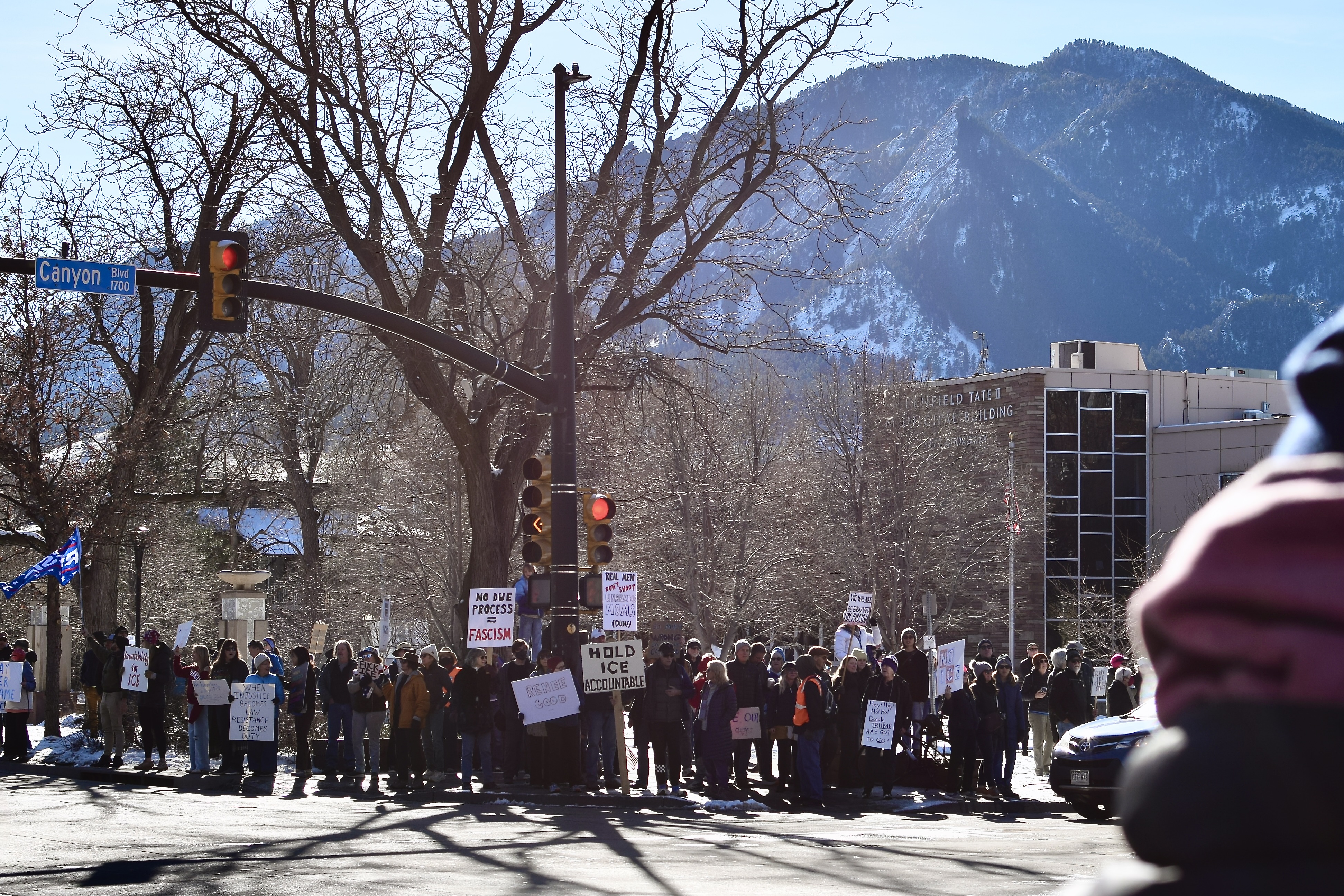
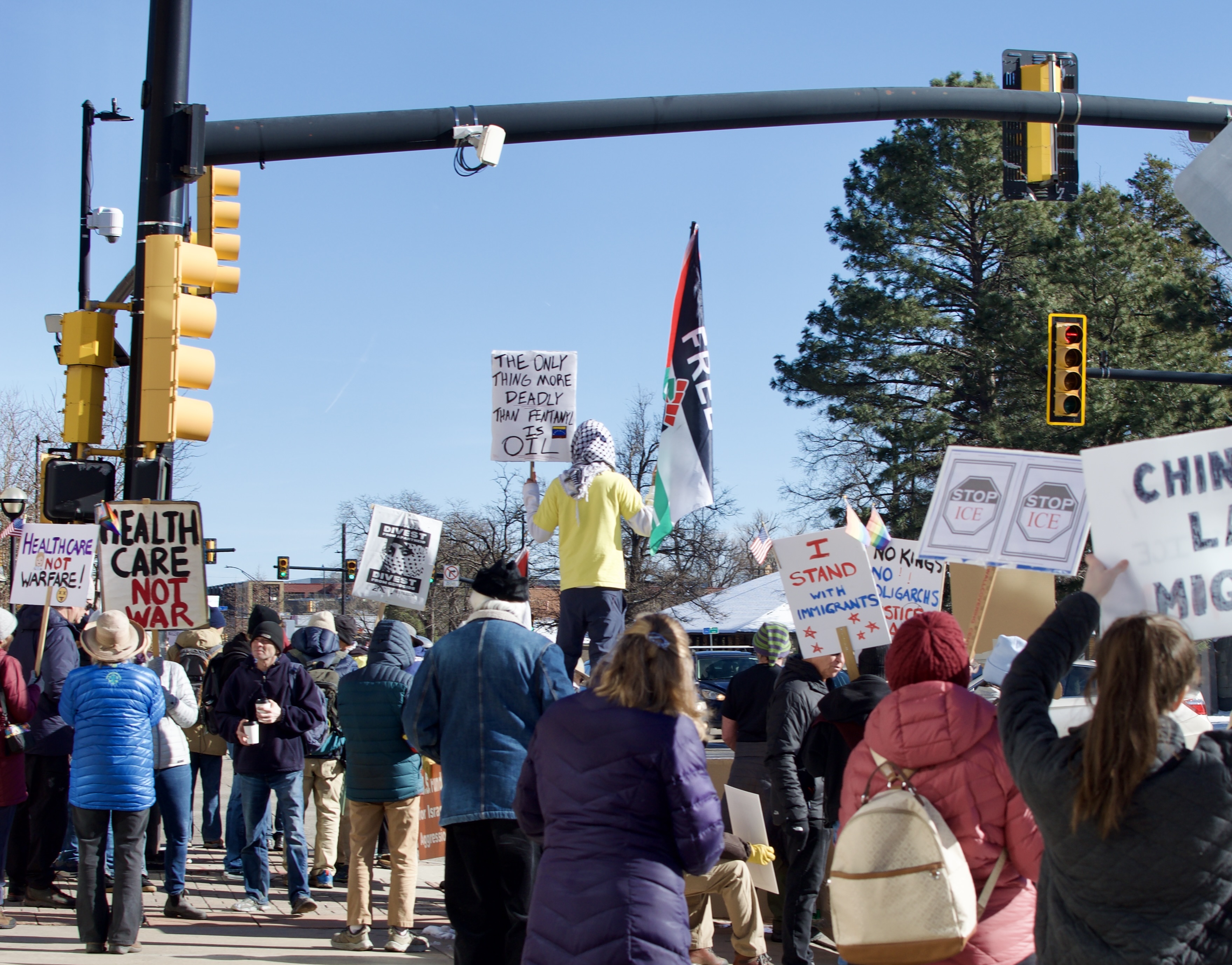
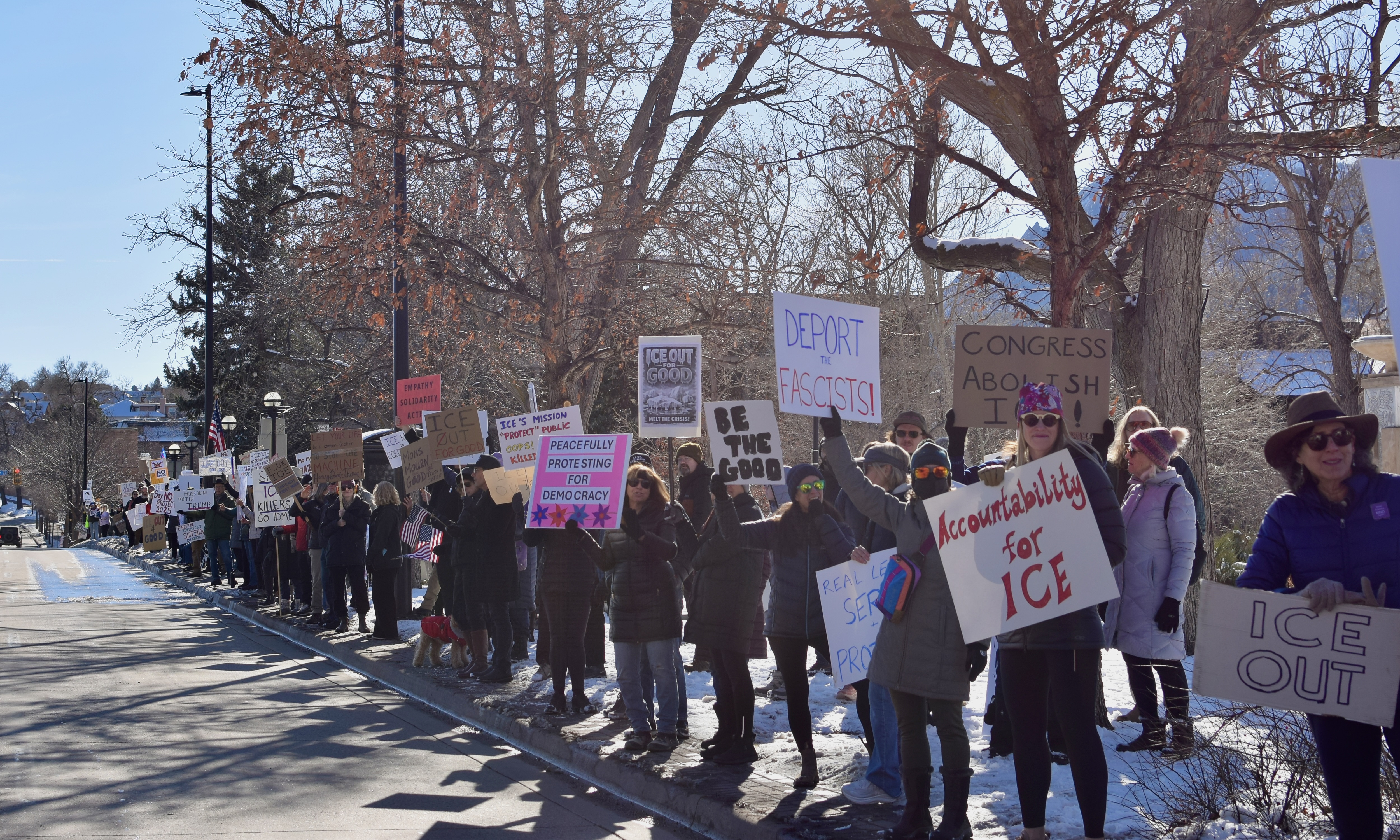
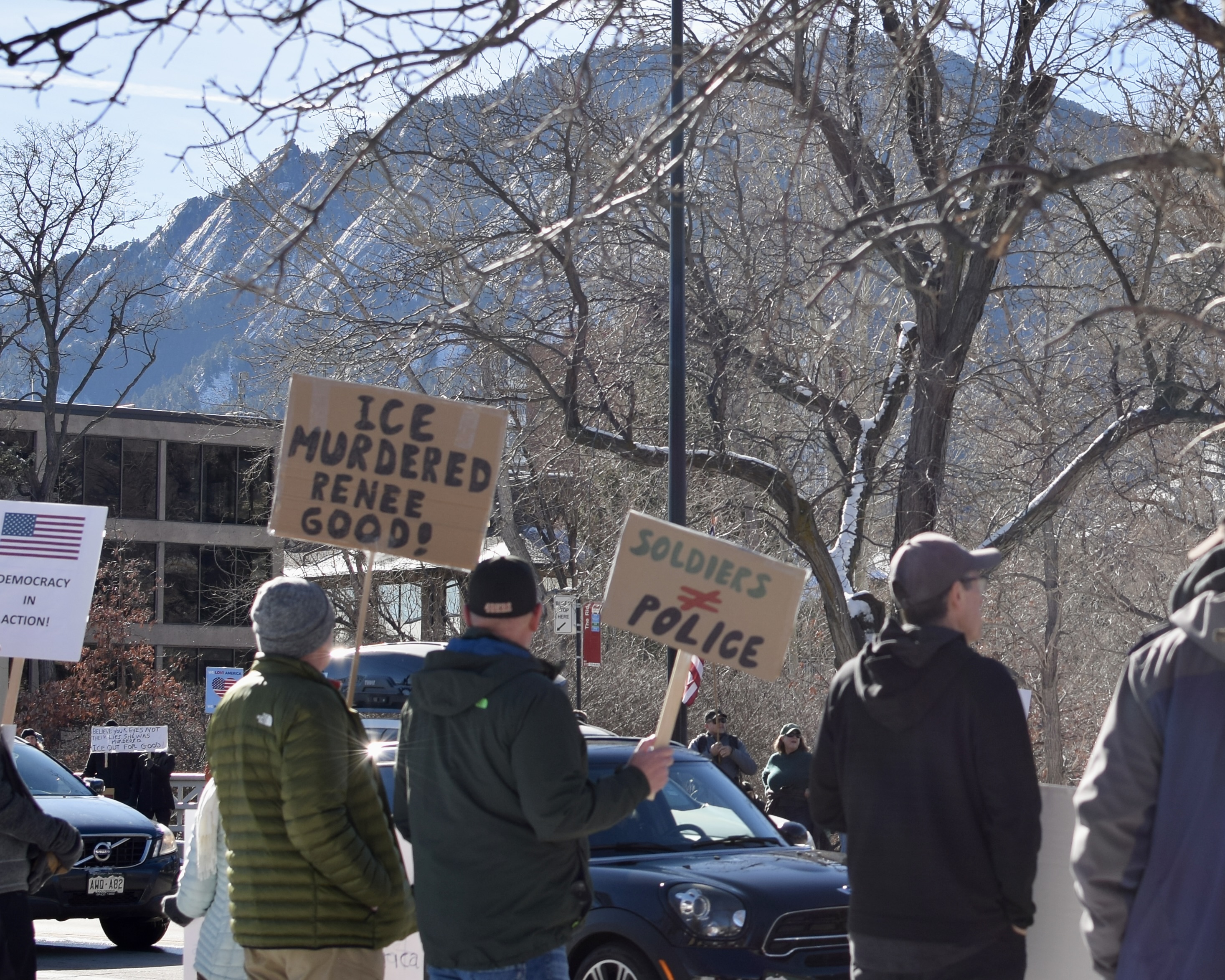
Since Jan. 7, hundreds of demonstrations have emerged all around the country, protesting the death of Renee Good, a Minneapolis resident, mother of three and award-winning poet who was fatally shot by a U.S. Immigration and Customs Enforcement (ICE) officer.
In Good’s home city of Minneapolis, Minnesota, protests have been among the largest. Thousands of protestors have gathered in the streets since Good’s death, even as the Department of Homeland Security (DHS) announced it would send hundreds more federal agents to the city.
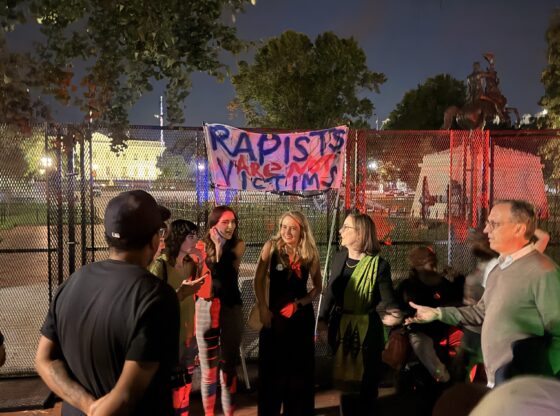
While Minneapolis has been the center of the current protests, demonstrations have spread across state lines, with over 1,000 organized events anticipated nationwide, many of which have already taken place. From Los Angeles to New York City, and from New Braunfels, Tex. to South Haven, Mich., cities both large and small are organizing rallies, candlelight vigils and other gatherings as a part of the “ICE Out For Good” campaign.
In Denver, protests occurred on Jan. 7 hours after the news of Good’s death, the first taking place at the GEO Group ICE detention facility in Aurora.
Others in Colorado held demonstrations at Key Lime Air hangar, a small charter airline based out of Centennial that has been contracted by DHS to transport ICE detainees across the country, urging the facility to cut ties with the agency.
Denver saw more protests at the Capitol on Jan. 10, drawing support from hundreds as they marched through downtown in solidarity with Good and the city of Minneapolis.
In downtown Boulder, advocates gathered on Broadway and Canyon Boulevard for a demonstration organized by Forever Indivisible Boulder, holding signs that read anti-ICE messages in both English and Spanish.
At the University of Denver (DU), the Club for Collective Liberation (CCL) has taken steps to show support for those in Minneapolis and the greater immigrant community, emphasizing the importance of cross-community solidarity.
“It’s called CCL because the very idea is about integrating our struggles and our communities and recognizing they’re not isolated struggles; they’re interconnected, and we’re stronger together,” said Reina Ortiz, a third-year student studying public policy and sociolegal studies.
CCL was co-founded by Ortiz in the fall of 2024 and has hosted a variety of community events, from organized carpooling to demonstrations at the GEO detention center in Aurora to their Anti-Ice Whistle Making Workshop.
“These workshops have popped up recently as a result of what’s happening in Minnesota,” said Ortiz. “They are both a physical tool to alert neighbors or call for help when you need it, and a good educational tool to talk about how dangerous ICE can be.”
The student organization also encourages dialogue and a multifaceted education for the liberation of local and global communities.
“Education and conversation are a form of resistance,” Kailey Aponte, a film studies and production major and the social media coordinator of CCL, said. “It’s just important to not stay silent in times like this. It’s important to talk about and educate people on these issues.”
Aponte, Ortiz and the rest of CCL aim to create pathways and engage in the dialogue they see as characteristic of their liberal arts education at DU.
“The violence against black and brown people and immigrant communities isn’t new to the country, and that’s why it’s more important now that we actually show up in ways maybe we failed to in the past,” Ortiz said.
Even amid nationwide unrest, Ortiz said it can be easy to disengage from these issues when they feel distant or out of sight, particularly for those not directly affected.
“No matter where you’re from in the U.S., it’s a pressing reality because we all have neighbors and families. We really are a diverse nation; we’re a country of immigrants, so it is our neighbors, our families and our reality no matter where we’re from,” said Ortiz.
She highlighted that the privilege of living and learning in a university environment should not be understated. While many DU students come from all over the world, the rising influence of ICE and the experiences in Denver demonstrate that these issues are applicable in many other contexts.
“Here in [the] university, we have a particularly privileged position to be a bit separate from it, where we can learn about what’s happening in the community, be safe and bring it back to our cities,” Ortiz said.
Recent coverage has highlighted concerns about individuals’ safety and community trust in the wake of the fatal shooting of Good by an ICE agent wearing a face covering. Reports note that many ICE agents wear masks, gaiters and other forms of face coverings, which some community members mark as contributing to anxiety about enforcement actions.
On Jan. 14, Denver City Council members Flor Alvidrez and Shontel Lewis proposed an ordinance prohibiting law enforcement officers from concealing their identities while interrogating, detaining or arresting an individual.
“The practice of concealment has several concerning impacts, and masked law enforcement undermines public trust,” said Alvidrez.
Some city officials suggested the ordinance would address public safety fears, while others were hesitant about its implementation and effectiveness.
Like Alvidrez, Ortiz believes that building trust requires accountability.
“We can only protect each other when we trust each other, when we know each other’s names and faces,” Ortiz said.
Denver is one of several cities resisting the influence of ICE in solidarity with Minneapolis.
In Chicago, organizers used tactics such as rapid response networks, following ICE and U.S. Customs and Border Protection (CBP) vehicles with whistles to warn others.
As early as last year in Los Angeles, advocates created Signal chats and organized networks to alert people when ICE agents were spotted near sidewalks and Home Depot parking lots. These alerts helped residents share real-time information about enforcement activity.
In New York City, thousands braved freezing temperatures to protest ongoing crackdowns. Others distributed thousands of whistles in anticipation of an expected surge of immigration enforcement activity.
“To start a community network and a rapid response for each neighborhood in your own city will be very significant when ICE tries to do the same thing to your city. And they will; that is part of the plan. Minneapolis is the first of many,” said Ellie Barnett-Cashman, a DU alumna and Minneapolis resident who is currently engaged in on-the-ground organizing.
While attending demonstrations is a critical part of showing solidarity, Barnett-Cashman suggested that there are more direct ways to support communities at risk.
“It’s not just protesting and rallying or going to vigils. It’s crowdfunding, raising money for families who aren’t leaving their homes right now,” said Barnett-Cashman.
As Minneapolis continues to face ongoing violence and pressure from federal authorities, daily headlines continue to emerge.
On Jan. 24, federal agents shot and killed Alex Jeffrey Pretti, a 37-year-old Minneapolis resident, U.S. citizen and ICU nurse. Forensic audio analysis indicated 10 shots were fired in less than five seconds.
In Colorado, demonstrations ensued in Denver, Boulder, Greeley, Colorado Springs and other cities with hundreds of Coloradans protesting Pretti’s killing.
To Barnett-Cashman and others, this is a time of community resistance.
“While it might feel like your small impact isn’t incredibly influential, the small impact of many people is what really matters. Any awareness you can spread, any resistance you can show, or any solidarity you can demonstrate is significant,” said Barnett-Cashman.
As the federal government continues to deploy agents, detain community members and raise concerns about public safety, communities around the nation continue to express solidarity with Minneapolis.