On June 4, 2025, the University of Denver’s Faculty Senate voted to express no confidence in Chancellor Jeremy Haefner’s leadership. This vote was one of seven referendums held by various organizations on campus during the same period, six of which came to the same conclusion.
The Board of Trustees unanimously voted to express confidence in the chancellor. Votes held by the student senate of the Sturm College of Law’s Student Bar Association, DU’s chapter of the American Association of University Professors (AAUP) and Faculty Senate, as well as two held by CAHSS and the faculty-wide referendum, expressed no confidence in Haefner’s leadership.
Approaching the one year anniversary of the vote, The Denver Clarion sat down with Haefner to discuss its lasting impact on the university and its leadership.
Haefner began his career in higher education as a faculty member. With this background, he described how the vote impacted him personally, beyond his role as an administrator.
“When the faculty say, ‘we want to do a vote of no confidence,’ it does hurt, right? There’s no way around that,” Haefner said.
He said professionally, he had to set those feelings aside.
“The role of the chancellor has to be one always looking out for the best interests of the university,” Haefner said. “I have to have some thick skin in order to stay focused on that.”
When asked whether he had considered stepping down — before the vote or after — Haefner’s answer was simple: “No.”
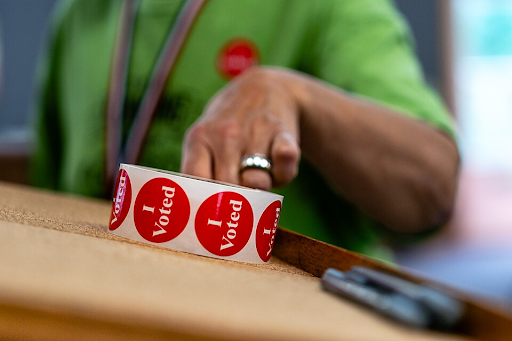
He noted that in the referendum held following the Faculty Senate vote, 577 of the university’s 822 eligible faculty members participated. Of those who voted, 56 percent (324) expressed no confidence, 37 percent (211) opposed the referendum and 7 percent (42) abstained. Overall, the no confidence votes represented just under 40 percent of all eligible faculty members, though the measure passed.
When asked if he was surprised by the outcome of the vote, Haefner said he was not.
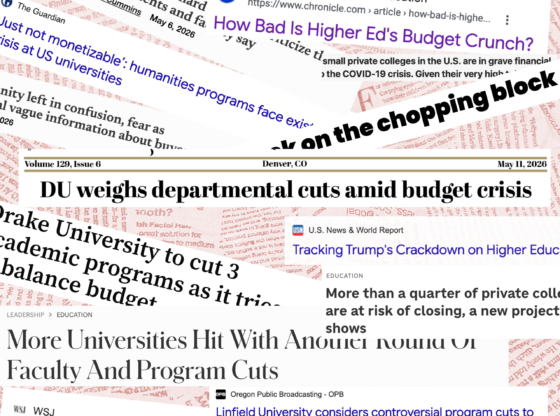
Haefner noted that institutions around the country face budget pressures like those that unfolded in CAHSS last year and prompted further reductions this year. But he acknowledged that the fallout at DU took on a life of its own.
“There were a lot of leadership changes happening at that point in time, and that created a lot of concern,” he said. “While a lot of universities are going through a lot of change, we’re going through a tremendous amount of change, and it’s needed just because of where we are in the marketplace. I think that is magnifying the issue.”
Haefner also pointed to past communication gaps between the administration and the campus community, and believes that improvements following the vote have been a positive outcome of the situation, though he did not cite specific initiatives.
Several faculty members recently described feeling concerned about a lack of clear communication and transparency from administrators in anonymous interviews with The Denver Clarion.
Since the vote, Haefner has said he has worked to keep the university focused on its core mission of providing students with a strong educational experience amid ongoing campus tensions.
“The North Star is our students and the university, and making sure that it is going to continue to provide the exceptional education and the exceptional discovery of research and the dissemination of new knowledge. I’m committed to making sure that it is flourishing, that we have a healthy value proposition for our students. And that we have faculty and staff that are exceptional and supporting their needs, and they see that the university is on a path for thriving and flourishing,” Haefner said.
That sense of purpose has carried him through a year of difficult decisions, some of which Haefner acknowledges haven’t been popular.
“There’s always going to be disagreements. There’s always going to be portions of the faculty and staff that disagree with the administration. That’s a good thing for universities, because it keeps us in check,” he said.
While the university faces both internal discord and external pressures, Haefner believes that the gap between university administrators and faculty members is beginning to narrow.
“I don’t think a vote of no confidence is healthy. Don’t get me wrong. But I also think there’s a lot of change that has happened in the last 10 months. People are beginning to realize that if we don’t change and change fairly quickly, we will not be the university that we want to be.”