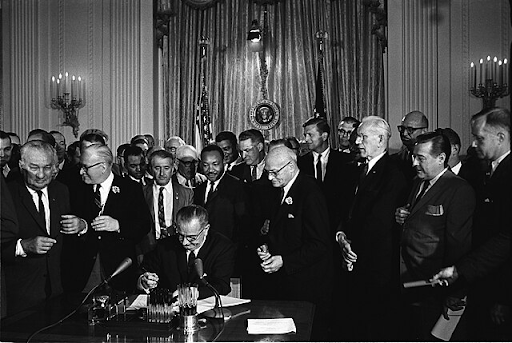
In a recent interview with The New York Times, President Trump said he believes that civil-rights era protections, including the Civil Rights Act of 1964, have resulted in white people being “very badly treated.”
This statement reflects the ongoing push by the Trump administration to eliminate diversity, equity and inclusion (DEI) initiatives nationwide to “restore merit-based opportunity.”
In a statement on the administration’s attack on civil rights, the New York City Bar writes that as several states passed Jim Crow laws under the separate but equal doctrine, the Trump administration, “appears to be relying on the same misconception of equality underlying equal application theory to undo the progress made under the Civil Rights Acts.”
The statement also prompted discussion among University of Denver students about the administration’s views on “reverse-discrimination,” a term referring to a claim by a non-minority individual that they were discriminated against on the basis of their race, gender or other attributes. In recent years, the number of these claims has risen, especially in affirmative action cases.
“It’s crazy to say that it causes more discrimination,” said Camryn Gunter, a fourth-year physics and math major and current president of DU’s Black Student Alliance (BSA).
“My mom was one of the first to go to an integrated school. Without the Civil Rights Movement, we wouldn’t have as much access to higher education. And we wouldn’t have spaces like BSA at DU,” said Nadia Brooks, former BSA treasurer and DU alumna.
NAACP president Derrick Johnson spoke on Trump’s recent comments, “The issue isn’t that he is unaware of the history or lacks education, it’s that deception is the point…There is zero evidence, none, that the civil rights movement harmed white people in any way.”
As we honor Dr. Martin Luther King Jr.’s accomplishments on Jan. 19, it is essential to recognize the history of the Civil Rights Movement and its vital impact on the United States and the rest of the world.